


 以前的
以前的
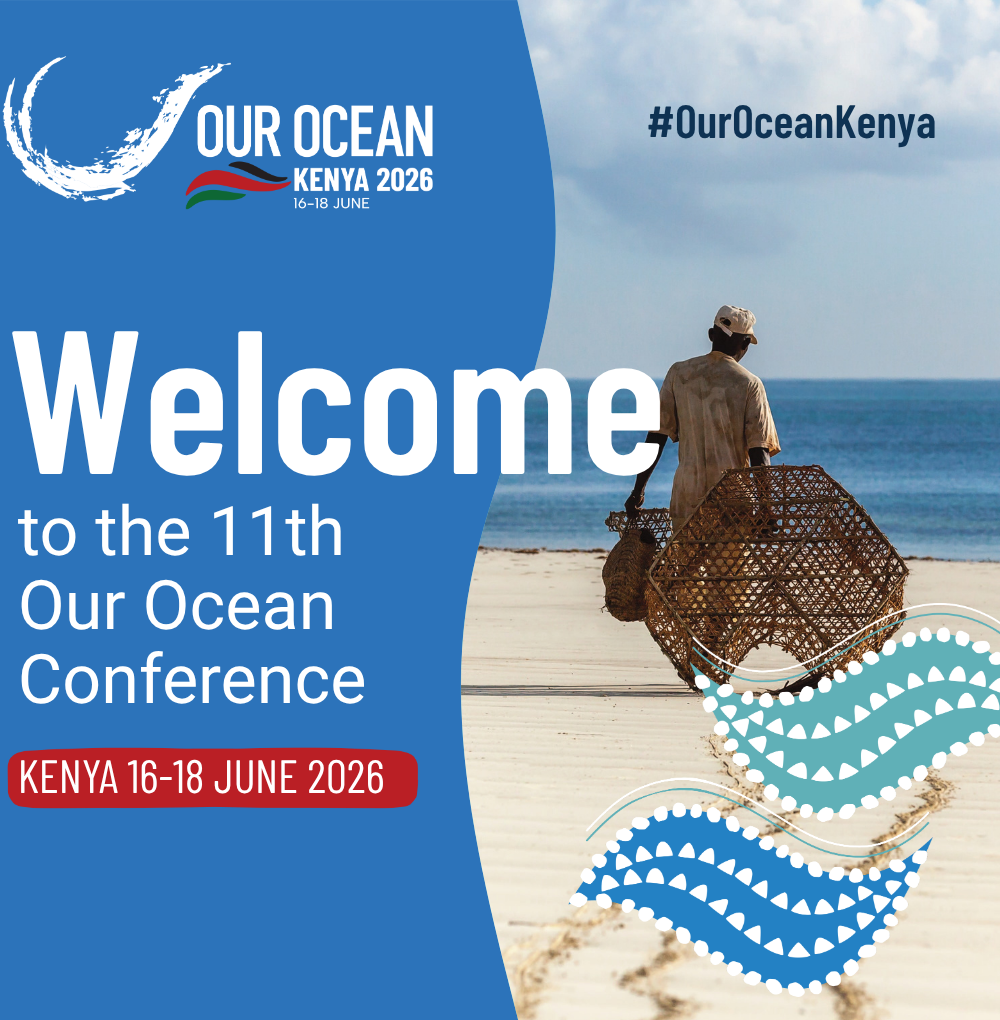
From 16-18 of June, governments, experts and ocean leaders are convening at the 2026 Our Ocean Conference – hosted this year by Ocean Panel member, Kenya – to elevate the actions needed to secure a healthy, productive and resilient ocean for generations to come.
Key to achieving this outcome is the Ocean Panel’s 100% approach, where all ocean areas under national jurisdictions are managed sustainably. Through Sustainable Ocean Plans (SOPs), countries can align conservation, fisheries and aquaculture, climate action, food systems and economic development under a single framework, helping to deliver on global commitments while supporting national priorities.
However, effective ocean management depends on robust ocean observation systems, scientific research, and data collection. Despite this, ocean observation remains significantly underfunded despite their critical role in helping countries understand changing ocean conditions, strengthen resilience, and respond to growing risks such as extreme weather, coastal flooding, and storm surges.
Throughout the 2026 Our Ocean Conference, Ocean Panel members, partners, and experts will participate in events focused on sustainable ocean management, ocean knowledge, climate resilience and Blue Foods.
Explore some of these events below:
15 June
High-Level African Blue Food Leadership Roundtable
9:00am – 5:00pm
Hosted by: Aquatic Blue Food Coalition, African Union Development Agency-NEPAD, the Secretariat for the High Level Panel for a Sustainable Ocean Economy
Aquatic blue foods are increasingly central to delivering nutrition, livelihoods, and climate-resilient food systems across Africa. This ministerial-level workshop will bring together Ministers, senior policymakers, and technical experts from across Africa attending OOC11 to develop and announce concrete commitments on blue foods. Topics will include leveraging blue foods in climate strategies, reducing food loss and waste across fisheries and aquaculture value chains, and advancing gender equity and youth opportunities in the aquatic food sector. The session will close with a dinner showcasing locally sourced seafood from small-scale fishers.
16 June
Designing Blue Finance for Poverty Reduction and Community Resilience
4:00 pm – 5:15 pm
Hosted by: Itad, UK Government’s Department for Environment, Food and Rural Affairs (Defra), Portugal’s Ministry of Agriculture and Maritime Affairs, Global Fund for Coral Reef (GFCR), Ocean Risk and Resilience Action Alliance (ORRAA)
Blue finance has huge potential to protect our oceans – but only if it also works for the people who depend on them.
Speakers will share perspectives and examples of how Blue Finance can best support both poverty reduction and ocean sustainability. They will discuss what works, where trade-offs exist, where gaps remain, and how partnerships can be strengthened to ensure blue finance delivers measurable economic, social and environmental benefits.
Protecting Climate-Resilient Coral Reefs: From Political Commitment to Investable Action
4:00 pm – 5:15 pm
Hosted by: The governments of Kenya, Panama, Vanuatu, and Zanzibar. Co-organised by the Global Fund for Coral Reefs with other global partners
Coral reefs are among the most biodiverse and economically vital ecosystems on Earth, underpinning food security, livelihoods, coastal protection, and socio-economic resilience for hundreds of millions of people, particularly in developing coastal and island nations. Yet they face existential threats from climate change, pollution, overexploitation, and habitat loss, increasingly undermining local economies, exacerbating poverty, and heightening vulnerability to climate shocks. This high-level side event brings together Government champions, financial experts, and conservation leaders from across the globe to accelerate the translation of political commitments into concrete, fundable action for climate-resilient coral reefs, while strengthening inclusive growth, poverty alleviation, and long-term socio-economic resilience for coastal communities across the Global South.
17 June
Closing the Data-Finance Gap for Locally Led Ocean Action
1:00 pm – 2:15 pm
Hosted by: World Resources Institute, Government of Palau, AFR100, Data4Moz
This side event brings together communities, funders, governments, and data and technical providers to tackle that disconnect head-on. Drawing lessons from proven land restoration models in Africa— including TerraFund and the Land Accelerator — speakers will explore how redesigning funding access, monitoring systems, and capacity support can unlock finance for locally led ocean action. Topics will include what data local organizations actually need to access finance, how Indigenous and community knowledge can be integrated alongside conventional science, and what it takes to build the trust and transparency that makes these partnerships work.
The event will close with a call to action: an invitation for countries and organizations to contribute to a set of globally-informed principles for equitable, community-centered ocean finance and to join a community of practice committed to making those principles a reality.
Data in support of Food Security and Nutrition – Aquatic Foods for Resilient Food Systems
1:00 pm – 2:15 pm
Hosted by: Global Action Network Sustainable Food from the Oceans and Inland Waters for Food Security and Nutrition, led by Norway under the UN Decade of Action on Nutrition and cohosted with Angola, Brazil and other global partners.
This side event will bring together participants from across regions, including governments, UN agencies, research institutions, private sector actors, and young and local voices from Africa and beyond. The event will highlight the importance of integrating food security and nutrition into ocean governance and development cooperation, as well as the importance of aquatic food systems for food security, supporting livelihoods, improving diet quality, and building resilience. This initiative aims to strengthen coordinated action at the ocean–food–nutrition nexus through improved data-sharing, enhanced regional collaboration, and stronger science–policy integration.
18 June
OceanEye: Stronger together for Global Ocean Observation
1:00 pm – 2:15 pm
Hosted by: The European Union, IOC-UNESCO, World Resources Institute, and High Level Panel for a Sustainable Ocean Economy
Ocean observation capabilities are a critical infrastructure for understanding and responding to environmental change and for supporting sustainable development. Yet, global ocean observation today faces a number of challenges. It remains subcritical and insufficiently resourced, with significant gaps, especially in remote areas like polar and deep-sea regions and in the fields of biodiversity and ecosystems. These gaps leave blind spots in decision-making, especially for processes such as sustainable ocean planning, national adaptation plans, disaster risk reduction, and ocean-based mitigation and adaptation strategies.
Since no single country can observe the ocean alone, this side event aimed at discussing possible pledges, the first in a series of events, aims to generate collective and sustained commitments to support the sustainability of GOOS.
Raising Ambition and Financing in the Wider Caribbean: Advancing the Wider Caribbean Ocean Coordination Mechanism and the Actioning Blue 30×30 Roadmap
1:00 pm – 2:15 pm
Hosted by: Government of Jamaica, Government of Grenada, Dominican Republic and Panama, CARICOM Secretariat and other global partners.
Caribbean countries will present a coordinated package of new and strengthened commitments demonstrating implementation readiness and coordinated action. These include:
- New endorsements of the Actioning Blue Declaration
- New Signatures of the Wider Caribbean OCM MoU
- New announcements of expanded marine protection
- National pledges to implement Ocean Accounts by 2030
- Commitments to develop Sustainable Ocean Plans & engage with the High Level Panel for a Sustainable Ocean Economy
Together these commitments represent coordination of action at the Ocean-Climate-biodiversity-sustainable development nexus regionally across Governments and IGOs, representing a more ecosystem based approach to ocean governance.
Advancing an inclusive blue economy through sustainable ocean planning for resilient coastal futures
5:30 pm – 6:45 pm
Hosted by: Government of Ghana and Government of Kenya
This side event will explore how integrated ocean management can support sustainable economic development, strengthen coastal resilience, and create opportunities for communities while safeguarding ocean health.
Towards a Global Ocean Finance Cooperation Platform: Governance Insights from Latin America and Africa
8:30 am – 9:45 am
Hosted by: Republic of Korea and Government of Chile
This side event will review the implementation of the blue economy framework launched at OOC10 (2025) and present strategic directions for scaling ocean finance toward UNOC-4 (2028), with a focus on cooperation platform development and governance strengthening.
The event seeks to move beyond conceptual discussions by examining practical case studies from Latin America and Africa to derive actionable insights for building such a cooperation platform and strengthening its governance structure. By explicitly comparing market-based approaches in Latin America and public and development finance-driven models in Africa, the session will provide cross-regional insights into how different financial and governance models can be integrated into a coherent global system. Illustrative cases, including Chile’s blue bond initiatives and Africa’s sovereign blue bond and regional cooperation platforms, will be used to ground the discussion in practical experience.
Scaling Ocean-Climate Action at COP31: From Dialogue to Delivery through Blue NDCs and Finance Reform
8:30 am – 9:45 am
Hosted by: Government of Australia, Government of Belgium, Government of Brazil, Government of Fiji, Government of France, Republic of Türkiye, and other global partners.
The discussion will highlight how investing in and increasing access to climate finance for ocean-climate solutions can deliver on cross-sector investment, workforce development, and national implementation goals. The side event will offer a readout of the 2026 Ocean and Climate Change Dialogue discussions, preview the launch of the Blue NDC Implementation Taskforce, and showcase practical implementation examples from Türkiye, Australia, Fiji, Belgium, Brazil, and other partners. Special attention will be given to opportunities on the road to COP31 linked to the Standing Committee on Finance draft guidance, the 2026 SCF Forum, and the Pacific Pre-COP process.
By bringing together governments, scientific institutions, civil society, and ocean-dependent communities, the event will create a strategic bridge between policy ambition, finance reform, and local action to accelerate delivery of ocean-climate solutions.
From Planning to Action: Advancing Ocean Governance and Sustainable Finance for Implementation
2:00 pm – 3:15 pm
Hosted by: Development Bank for Latin America and the Caribbean (CAF), World Resources Institute, and Bezos Earth Fund
This event will bring together governments from CMAR countries, financial institutions, and technical partners to discuss how ocean commitments are being advanced through both coordinated regional action in the Eastern Tropical Pacific and strengthened national planning processes.
The session will highlight progress under the CMAR 10-Year Action Plan, including the role of shared tools such as the Monitoring Dashboard to track implementation, as well as emerging approaches to sustainable finance. It will also draw on national-level efforts, including Sustainable Ocean Plans (SOPs), as a key framework enabling countries to align governance, investment, and implementation pathways.
Overall, the discussion will showcase how regional collaboration and national processes are converging to scale marine conservation and deliver on global targets such as 30×30.
To discover more events at the 11th Our Ocean Conference in Mombasa, Kenya view the official list here.

